Gas Tank Reviews
GE RealMAX Choice 40 Gallon Gas Water Heater Review
Researched from the DOE test procedures, NFPA 54 and NEC code tables, and manufacturer specifications. Updated .
Quick answer
Atmospheric is the oldest and simplest way to vent a gas water heater: the exhaust rises through a draft hood and out an existing chimney or B-vent on buoyancy alone, no blower and no electrical connection required. That simplicity is also the category's weak point. The vent type on a gas tank decides more about its installation, and its risk, than the tank itself does, and atmospheric is the vent style most exposed to backdrafting, where combustion gas spills into the house instead of leaving through the flue.
This page covers exactly what the GE RealMAX Choice listing publishes, what it leaves out, and what atmospheric venting actually requires to be safe. We did not test, install or measure this unit ourselves. It is compiled from the manufacturer listing and the general venting requirements atmospheric gas appliances publish.
What the specifications actually say
The listing publishes 40 gallons of capacity, natural gas as the fuel, and atmospheric as the vent style. It does not publish the BTU input, which is the figure that actually determines recovery rate on a gas tank, nor the measured UEF, the measured first hour rating, or the dimensions.
| Specification | What the listing states |
|---|---|
| Tank capacity | 40 gallons, tall |
| Fuel type | Natural gas |
| Vent style | Atmospheric, drafts through an existing flue on buoyancy |
| BTU input | Not published in this listing |
| Recovery rate | Not computable without a published BTU input |
| Measured UEF and FHR (DOE label) | Not published in this listing |
| Warranty term | Not published in this listing |
Published standard Source: Manufacturer listing data compiled in the WaterHeaterCalc catalog. Capacity, fuel type and vent style are as published; BTU input and warranty are not carried in this listing.. The rating plate on the physical tank carries the BTU input. Once you have it, the recovery rate calculator turns it into an estimated recovery rate and first hour rating.
Who it suits
This suits a household with an existing masonry or B-vent flue that already passes a draft test and is sized correctly for a single atmospheric appliance, replacing a tank that vented through the same flue without issue. It suits a budget-conscious like-for-like swap where adding electrical venting is unnecessary because the existing chimney already works. It suits a household whose furnace, if it shares the same flue, still burns fuel at a rate the shared flue was sized for.
Who should not buy it
Skip this if the mechanical space is tight enough to limit combustion air, since an atmospheric appliance draws its combustion air from the room it sits in rather than ducting it in directly. Skip it if a furnace on the same shared flue has been replaced with a high-efficiency, power-vented model, since removing that furnace's exhaust volume from a shared flue can leave it oversized for the water heater alone, which is itself a backdrafting risk. Skip it if the flue has never been inspected, or if there is any household history of soot near the draft hood, moisture staining near the flue, or a lingering combustion odor: those are signs to have a licensed technician check the venting before buying any atmospheric replacement, not after.
What the installation actually involves
Beyond the water and gas connections, an atmospheric installation lives or dies on the flue: correct diameter for the connector, correct rise before the first elbow, and a draft hood that is not obstructed. Backdrafting on an atmospheric vent has no smell and no visible sign of its own; a technician verifies it with a draft test, not a glance. Gas line sizing and connection belong to a licensed plumber or gas fitter, and the gas line size calculator exists to check pipe capacity, not to replace that professional's work on the fitting itself.
Installation labor cost is outside what this site covers; that estimate lives at houseprojectcalc.com.
How we researched this
We did not test, install or measure this water heater ourselves. This review is compiled from the manufacturer listing and the venting principles that apply to atmospheric gas water heaters generally, cross-referenced against the consensus in verified owner reviews. Where the listing does not publish a figure, including the BTU input that would let us compute a recovery rate, we say so directly rather than assume a typical value for a tank this size.
What actually pairs with this tank
An atmospheric gas tank still needs the same pressure-vessel accessories as any storage water heater, plus a plumber's attention to the flue itself, which is outside anything sold on this page.
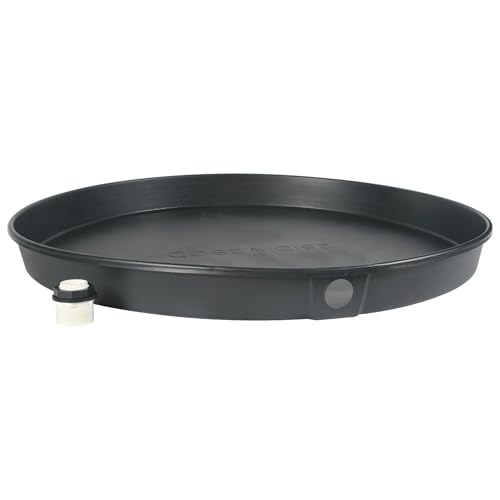
Camco 26 in Plastic Pan
$29.00A drain pan under the tank, sized to the footprint and code-acceptable for a basement or utility closet install.
Best for: An electric tank on concrete
Check price on Amazon
Watts PLT-5 2.1 Gallon Potable
$87.76A thermal expansion tank for a closed system, sized against the 40 gallon capacity rather than guessed.
Best for: A standard tank where the brand is specified
Check price on Amazon
Eastman 42 in Flexible Magnesium Anode
$35.25A magnesium anode rod, worth having on the shelf before the factory rod is exhausted rather than after a rotten-egg smell shows up.
Best for: A tank with a low ceiling above it
Check price on AmazonFrequently asked questions
- What does "atmospheric" mean on a gas water heater vent?
- It means the tank vents through a draft hood on natural buoyancy alone, with no blower or electrical connection, relying entirely on an existing chimney or B-vent to carry combustion gas out of the house. It is the simplest and usually cheapest gas venting style to install, and it is also the style most exposed to backdrafting if the flue is undersized, blocked, or shared with an appliance that no longer needs it.
- What is the BTU input of the GE RealMAX Choice 40 gallon?
- The manufacturer listing does not publish a BTU input figure for this unit. That number is read directly off the rating plate on the physical tank once it arrives, and it is the figure needed to compute an accurate recovery rate and estimated first hour rating using the recovery rate calculator.
- What is backdrafting and why is it dangerous?
- Backdrafting happens when combustion gas, including carbon monoxide, spills into the house instead of leaving through the flue, usually because the flue is blocked, undersized, or overpowered by household exhaust fans competing for the same air. It produces no smell and no visible warning of its own, which is why a licensed technician checks for it with a draft test rather than an inspection by eye.
- Can I share an atmospheric water heater flue with a furnace?
- Sometimes, if the shared flue is sized correctly for the combined exhaust of both appliances, which is a calculation a licensed technician performs, not a homeowner assumption. If the furnace on that flue is later replaced with a high-efficiency, power-vented model, the flue can become oversized for the water heater alone and start backdrafting, so it should be re-checked at that point.
- Does this tank need an expansion tank?
- Yes, if the home has a closed plumbing system, which includes a check valve, backflow preventer, or pressure-reducing valve on the supply line. That requirement applies to every storage water heater regardless of fuel type or vent style, and it is sized against the tank’s capacity with the expansion tank size calculator.
- Is a power vent tank safer than an atmospheric one?
- A power vent tank removes reliance on an existing chimney's draft entirely, which sidesteps the backdrafting risk that comes from a compromised or shared flue, at the cost of needing a nearby electrical outlet for the blower. Whether that tradeoff is worth it depends on the condition of the existing flue, which a licensed technician can assess before a replacement is chosen.
Safety note. Gas line and flue work belong to a licensed plumber or gas fitter, because improper venting on an atmospheric tank produces carbon monoxide with no smell to warn of it. The T&P valve on top of this tank must never be capped, plugged or removed; a dripping valve calls for a new valve, not a cap.