Maintenance
Anode Rod Size and Type Chart
Researched from the DOE test procedures, NFPA 54 and NEC code tables, and manufacturer specifications. Updated .
Quick answer
An anode rod protects a steel tank's interior from corrosion through galvanic action: the rod's metal corrodes preferentially so the tank's steel does not, which is why it is called a sacrificial anode. A conventional rod eventually consumes itself down to a bare steel core wire and needs replacing, while a powered anode uses an electrical current instead of a consumable metal and does not wear down the same way.
This page covers three things a first-time anode shopper commonly gets wrong: which material fits which water condition, how much clearance a rod actually needs above the tank, and the fastener size mix-up that leads to ordering the wrong socket. The anode rod life calculator estimates remaining service life from a rod's age and a household's water condition.
What does an anode rod actually do?
Steel corrodes when it sits in water in the presence of dissolved minerals and a small electrical potential between different points on the metal. An anode rod is made from a more reactive metal, typically magnesium or an aluminum and zinc alloy, and that metal corrodes first, sacrificing itself so the tank's steel lining stays protected. Once the rod's usable metal is consumed down to its steel core wire, that protection stops working and the tank's own steel becomes the next thing corroding.
What are the tradeoffs between magnesium, aluminum/zinc and powered anode rods?
| Material | Best for | Tradeoff |
|---|---|---|
| Magnesium | Most municipal water supplies | Reacts fastest with sulfate-reducing bacteria, often the source of a rotten egg smell in soft or treated water |
| Aluminum/zinc | Softened water, odor-prone wells | Consumes more mass per unit of protection and lasts differently across water conditions than magnesium |
| Impressed current (powered) | Any water chemistry, including softened water | No sacrificial metal to replace, but needs a nearby outlet and stops actively protecting the tank during an extended power outage |
Convention Source: General material tradeoffs drawn from how each metal behaves galvanically and from common owner-reported experience with odor and consumption rate; a specific tank manufacturer's approved anode materials govern for warranty purposes.. Switching materials to fix an odor problem is a common first step; a persistent odor after switching points toward the water itself, which is a question for homewatercalc.com.
What length anode rod do I need, and why does headroom matter?
A one-piece rigid rod needs nearly its own full length of clear space above the tank to be lowered straight in, which is the headroom problem that leads people toward flexible or segmented rods instead.
| Rod style | Typical length | Clearance needed above tank | Good for |
|---|---|---|---|
| One-piece rigid | About 42 to 44 inches | Nearly the full rod length | Installs with an open ceiling or attic above the tank |
| Segmented/link | About 42 to 44 inches total, in short linked sections | As little as about 6 to 8 inches | Basements and closets with low ceiling clearance |
| Flexible (single flexible core) | About 42 to 44 inches | Roughly 12 to 20 inches | Moderate clearance installs that cannot fit a rigid rod |
| Short-tank rod | About 30 to 32 inches | Scaled to the shorter rod length | Short or low-boy tanks such as a low-profile 40 gallon model |
Convention Source: Typical published lengths and clearance figures across common residential anode rod products. A specific tank's factory anode port and original rod length always govern; measure available clearance before ordering.. A tank's water heater dimensions chart on this site lists overall height, which is the starting point for estimating available headroom above it.
Why do people order the wrong socket size, and how do I avoid it?
A residential tank has two hex-headed fittings near the top that are easy to confuse: the anode rod plug and the heating element. They are not the same size.
| Fitting | Hex size | Common mistake |
|---|---|---|
| Anode rod plug | 1-1/16 inch hex | Ordering a 1-1/2 inch socket, which is too large for this fitting |
| Heating element | 1-1/2 inch hex | Ordering a 1-1/16 inch socket, which is too small for this fitting |
Convention Source: Commonly published hex dimensions across residential electric and gas storage tanks. No single code mandates this sizing, but it is functionally near-universal on single-rod residential anodes; a specific tank's manual is the final word.. Confirm which fitting is actually being opened before ordering a socket. Some combination units place the anode inside the hot outlet nipple rather than under its own hex plug, which changes the tool needed entirely.
How often should an anode rod be inspected, based on water condition?
| Water condition | Suggested inspection interval |
|---|---|
| Municipal water, moderate hardness | Every 2 years |
| Well water | Every year |
| Softened water | Every year |
| History of rotten egg odor | Every year, and consider a material change first |
Convention Source: Planning interval only; no test procedure or code publishes an anode inspection schedule. Softened and well water are commonly reported to consume a magnesium rod faster than untreated municipal water.. These are inspection intervals, not replacement intervals. A rod inspected at these intervals may still have useful life left and not need replacing every time.
When should an anode rod actually be replaced?
The most reliable field sign is bare core wire: once more than about six inches of the rod's steel core wire is exposed with the surrounding sacrificial metal gone, replacement is due regardless of the rod's age or the calendar interval it was inspected on. A rod that has become a thin, calcified, chalky stub, or one that has broken apart during removal, has also reached the end of its useful protection even if less than six inches of core wire happens to be visible.
Rods and tools by material
Pick a material based on water condition and headroom, not on price alone; the tables below explain why.

Eastman 42 in Flexible Magnesium Anode
$35.25A standard one-piece magnesium rod, the strongest sacrificial protection for most municipal water supplies.
Best for: A tank with a low ceiling above it
Check price on Amazon
Ozek 44 in Segmented Aluminum Zinc Anode
$36.45An aluminum and zinc rod for households dealing with a rotten egg odor or softened water that consumes magnesium quickly.
Best for: A tank with a sulphur smell
Check price on Amazon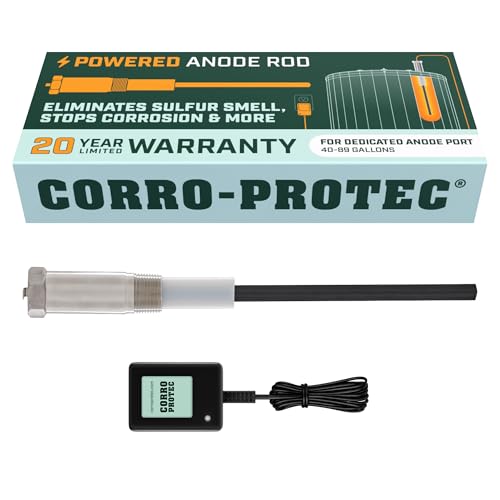
Corro-Protec Powered Anode Rod
$179.95An impressed-current rod with no sacrificial metal to replace, suitable for any water chemistry including softened water.
Best for: Hard water, or a tank you intend to keep
Check price on Amazon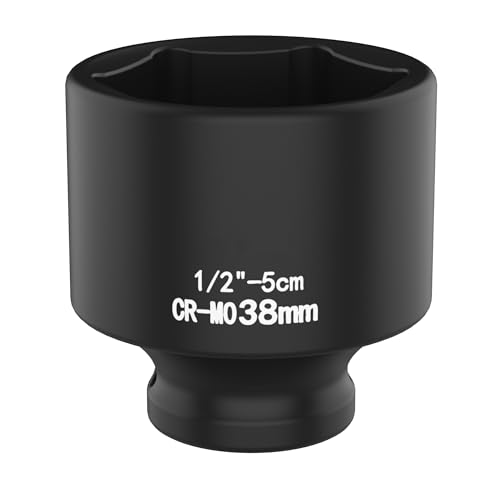
Timsec 1-1/2 in Element Socket, 1/2 in Drive
$13.99A 1-1/2 inch element socket, the size that is frequently and mistakenly ordered for anode rod removal instead of the correct 1-1/16 inch socket.
Best for: Any residential element replacement
Check price on AmazonFrequently asked questions
- What size hex head does an anode rod use?
- Most residential anode rods use a 1-1/16 inch hex head on their access plug. That is distinct from the 1-1/2 inch hex used on a screw-in heating element, and the two are easy to confuse since both fittings sit near the top of a typical residential tank. Confirming which fitting is being opened before ordering a socket avoids buying the wrong size.
- Is an anode rod hex the same size as a heating element socket?
- No. An anode rod plug typically uses a 1-1/16 inch hex, while a heating element typically uses a larger 1-1/2 inch hex. Ordering the wrong size, usually a 1-1/2 inch socket for an anode job, is one of the most common anode-related ordering mistakes, since both fittings are located close together near the top of the tank.
- How long should an anode rod be?
- Most residential one-piece rods run about 42 to 44 inches long, while short or low-boy tanks commonly use a shorter rod around 30 to 32 inches. A tank's actual clearance above it determines whether a full-length rigid rod fits, or whether a flexible or segmented rod of the same total length, needing far less headroom to install, is the better fit.
- Which anode rod material lasts longest?
- A powered impressed-current rod does not consume itself at all, so it lasts as long as its power supply and titanium electrode remain functional, effectively indefinitely under normal conditions. Among sacrificial rods, aluminum and zinc alloys generally outlast magnesium in softened or treated water, while magnesium is typically the stronger performer in untreated municipal supplies.
- How do I know when to replace an anode rod?
- Pull the rod and check its core wire. Once more than about six inches of bare steel core wire is exposed with no sacrificial metal remaining around it, replacement is due. A rod that has broken apart, turned into a thin chalky stub, or otherwise clearly lost most of its original diameter should also be replaced even before hitting that six inch mark.
- Does softened water affect anode rod lifespan?
- Yes, softened water is commonly reported to accelerate magnesium rod consumption compared with untreated municipal water, which is one reason an aluminum/zinc or powered rod is often recommended for a household running a water softener. Whether to soften water in the first place is a separate treatment decision, covered by homewatercalc.com rather than this site.
Measure clearance and confirm the fitting before ordering anything. The headroom above a tank decides whether a rigid, flexible or segmented rod fits, and confirming the anode plug's 1-1/16 inch hex before buying a socket avoids the single most common ordering mistake on this page's subject.