Troubleshooting
Water Heater Not Heating: How to Diagnose It
Researched from the DOE test procedures, NFPA 54 and NEC code tables, and manufacturer specifications. Updated .
Quick answer
No hot water is one of two different problems wearing the same symptom, and which one you have depends on whether the tank is electric or gas. An electric tank has two independent heating stages stacked one above the other, wired so only one runs at a time, which is exactly why the first stage to fail changes what the rest of the failure looks like. A gas tank has one burner and a much shorter list of parts standing between a cold tank and a working one: a pilot, a thermocouple and a gas control valve.
Work through the checks below in the order given, cheapest and safest first, and you will not swap a part that did not need swapping, and you will know plainly which failures are yours to fix and which one is not.
What should you check before opening anything up?
Confirm power and fuel are actually reaching the tank before suspecting any internal part. On an electric water heater, check the breaker in the panel: one that resets and holds means the interruption is resolved for now, while one that trips again immediately points to a short in a heating element or an internal wiring fault rather than a nuisance trip. On a gas water heater, confirm the gas valve on the unit itself is turned to the on position and that the pilot is actually lit; a pilot that has gone out is the single most common reason a gas tank stops producing any hot water at all.
Neither check requires opening an access panel or touching a wire, which is why both come first.
Why does an electric water heater have two thermostats and two elements?
A standard residential electric tank stacks an upper thermostat and element near the top of the tank with a lower thermostat and element further down, wired so the upper stage holds priority: while the upper thermostat calls for heat, the lower element stays off entirely, and the lower stage only takes its turn once the top section reports satisfied. That priority wiring is why the two failures feel different at the tap. A failure in the upper thermostat or the upper element cuts off the whole tank, because the lower stage never gets a turn until the top layer reports done. A failure in the lower thermostat or the lower element still lets the top of the tank heat normally, so the first draw runs hot and then turns cold quickly once that upper layer of water is used up.
What does each symptom point to on an electric water heater?
Match what actually happens at the tap against the table below before opening the access panel.
| Symptom | Likely cause | What to check next |
|---|---|---|
| No hot water at all, breaker holds | A tripped high limit reset button, or a failed upper thermostat | Press the red reset button on the upper thermostat once; if it trips again immediately, the upper thermostat or upper element is the suspect |
| No hot water at all, breaker trips repeatedly | A shorted heating element or a wiring fault | Turn the breaker off, verify with a meter, and check each element for continuity to the tank body |
| Water starts hot, then turns cold quickly | A failed lower element or lower thermostat | The upper stage is working; the lower element is the more likely part to replace |
| Water is only ever lukewarm at every tap | One failed element while the other still runs, or a thermostat set too low | Test each element's resistance and continuity separately, and confirm the thermostat setting |
Published standard Source: Standard residential electric water heater wiring, in which the upper thermostat holds priority over the lower stage, documented in manufacturer service and wiring diagrams.. Turn the breaker off and verify with a meter or non-contact tester before removing an access panel or touching any wire; a 240 V circuit runs on two hot legs fed from one double-pole breaker, and only switching that full breaker off removes power from both.
What is the safe diagnosis order for an electric water heater?
Work through failures cheapest and safest first, not most likely first.
- Breaker. Confirm it is on and holding, not just flipped back and immediately tripped again.
- High limit reset button. The red button on the upper thermostat cuts power to both elements if the tank overheats; press it once. If it clicks and trips again right away, stop there rather than pressing it repeatedly.
- Upper thermostat. With the breaker off and verified with a meter, a continuity check across the upper thermostat's contacts shows whether it is passing power through.
- Upper element. A resistance reading and a continuity check to the tank body separate a working element from a shorted or open one.
- Lower thermostat and lower element. Check these last, since a lower-stage failure only shows up as a partial loss of hot water, not a total one.
A replacement element and thermostat are inexpensive parts, and swapping one that tests bad is a reasonable homeowner repair once the breaker is confirmed off with a meter. An element that is not fully submerged should never be energized; a dry element burns out within seconds.
What is the safe diagnosis order for a gas water heater?
A gas tank has fewer parts standing between a cold tank and a working one.
- Pilot. Relight it following the label instructions on the tank. If it will not catch at all, confirm the gas supply valve is fully open and that the pilot tube is not blocked.
- Thermocouple. If the pilot lights but goes out once the control knob is released, the thermocouple is the most common cause. It is an inexpensive part and a straightforward swap for a homeowner comfortable working at the pilot assembly with the gas supply off.
- Gas control valve. If a new thermocouple does not fix a pilot that will not stay lit, or the pilot stays lit but the main burner never ignites on a hot water draw, the gas control valve itself is the likely cause.
This is where a homeowner's diagnosis should stop. A gas control valve is a factory-calibrated safety device tied directly to the burner and the flue. Replacing or adjusting one is a job for a licensed plumber or gas fitter, not a parts-swap project, and gas line and flue work belong to that same licensed trade.
When does the problem point at something other than a single failed part?
An element that keeps failing shortly after a replacement is often not a bad part twice in a row. A thick layer of sediment on the tank bottom insulates a lower element from the water around it, so the element overheats and burns out again; flushing the tank is the fix in that case, not another swap of the same part. See how sediment builds and what it costs the tank over time for the full explanation. On a power vent or direct vent gas model, a burner that will not ignite even with a good pilot and a good thermocouple can also mean a blocked intake or exhaust tripping the unit's own safety lockout, which again is venting work for a licensed technician rather than a parts diagnosis.
Parts and tools for this diagnosis
A thermostat, an element and a socket sized for the element nut cover most electric-side repairs once testing points to a bad part.

Reliance 9000507 Lower Thermostat
$13.96A direct replacement upper or lower thermostat for testing against a unit that fails a continuity check.
Best for: A tank that runs out too fast
Check price on Amazon
Camco 4500W 240V Foldback Element
$12.85A standard screw-in replacement element once a resistance or continuity test rules the old one out.
Best for: Hard water, where elements scale and burn out
Check price on Amazon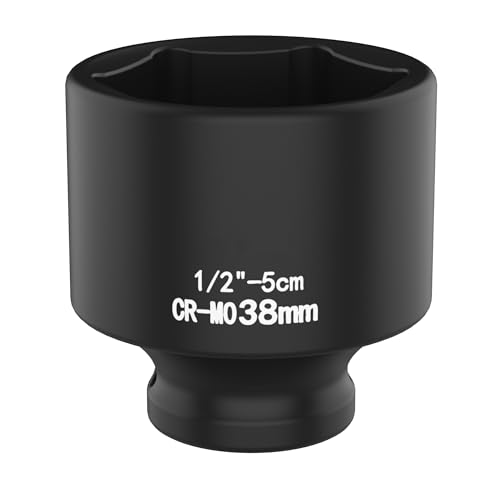
Timsec 1-1/2 in Element Socket, 1/2 in Drive
$13.99An element wrench sized for the hex on a standard screw-in element, needed to remove one without rounding it off.
Best for: Any residential element replacement
Check price on Amazon
BOMATA Digital Water Thermometer, IPX7
$9.99Confirms the actual temperature reaching a tap once a repair is made, rather than trusting a dial alone.
Best for: Checking tap temperature at several fixtures
Check price on AmazonFrequently asked questions
- Why does my electric water heater have no hot water at all, but the breaker looks fine?
- A breaker that stays on but leaves the tank cold usually means the tripped high limit reset button on the upper thermostat, or a failed upper thermostat itself. The upper stage controls the whole tank in a standard electric water heater, so a failure there cuts off both elements even though the breaker never trips. Pressing the reset button once, and testing the upper thermostat for continuity, is the next step.
- What does the red reset button on a water heater thermostat do?
- It is a high limit safety switch that cuts power to both heating elements if the water inside the tank gets hotter than the thermostat allows, protecting against a runaway heating cycle. Pressing it once restores power if the overheating condition has cleared. A reset button that trips again immediately points to a failed thermostat or a shorted element rather than a one-time fluke.
- Why does my water heater give a little hot water and then turn cold quickly?
- That pattern points to the lower element or the lower thermostat, since the upper stage is clearly still heating the top of the tank normally. Once that top layer of already-hot water is drawn off, the lower element should take over, and if it has failed, the water turning cold suddenly is the result. Testing the lower element for continuity and resistance is the next step.
- Why won't my gas water heater's pilot stay lit?
- A pilot that lights but goes out once the control knob is released most commonly means a failed thermocouple, the small safety sensor that has to detect the pilot flame to keep the gas valve open. It is an inexpensive part and a straightforward swap for someone comfortable working at the pilot assembly with the gas supply off first.
- I replaced the thermocouple and the pilot still won't stay lit. What is next?
- A pilot that still will not hold a flame after a new thermocouple points at the gas control valve itself. That is a factory-calibrated safety part tied directly to the burner and the flue, and it is a job for a licensed plumber or gas fitter rather than a homeowner repair, since it involves the gas supply and combustion safety.
- Is it safe to test a water heater thermostat or element myself?
- Yes, once the breaker is switched off and verified with a meter or non-contact tester, testing a thermostat or element for continuity and resistance is a reasonable homeowner task. What is not homeowner work is energizing an element that is not fully submerged, or opening a gas control valve, since one destroys a part in seconds and the other is a licensed trade's job.
Stop at the gas control valve, and stop at a breaker that trips again the instant it is reset. A pilot, a thermocouple, a thermostat and an element are all homeowner-diagnosable and homeowner-replaceable once the breaker or gas supply is confirmed off with a meter. A gas valve that will not hold a new thermocouple, and a breaker that will not stay reset, both mean calling a licensed plumber, gas fitter or electrician rather than continuing to swap parts.