Electric tank
How to Replace a Water Heater Element
Researched from the DOE test procedures, NFPA 54 and NEC code tables, and manufacturer specifications. Updated .
Quick answer
An electric water heater's heating element is a straightforward part to replace mechanically, one large screw-in fitting sealed with a gasket, but the job has two failure modes that matter more than the wrench work: a 240 volt circuit that is genuinely still live even when it looks off, and an element energized without water around it to carry away the heat it produces. Both are avoidable with a short checklist followed in order every time.
Elements fail from ordinary mineral scale building up on the element's surface until it overheats and burns out, or simply from age. A failed lower element is the more common complaint, since it does most of the initial heating work and sits closer to any sediment at the tank bottom, but upper elements fail too, particularly in a scale-heavy water supply.
How do I safely confirm the power is actually off?
Switching a breaker to off is the first step, never the last confirmation. A standard residential water heater element runs on a 240 volt circuit carrying two hot legs, and a mistaken breaker, a mislabeled panel, or a shared circuit can leave voltage present even after the switch is flipped. Before touching any wiring, check both leads at the element's terminals directly with a multimeter set to AC voltage, since probing only one leg to ground can read as safe even when the other leg is still live. Confirm zero volts across both terminals, not just one, before disconnecting anything.
How do I replace a water heater element, step by step?
- Turn off power to the water heater circuit at the breaker.
- Verify zero voltage at the element's terminals with a multimeter, checking across both hot legs, not just one to ground.
- Remove the access panel, insulation, and plastic safety guard covering the element and thermostat.
- Photograph or label the thermostat wiring before disconnecting it, since wire position varies by model.
- Close the cold water supply valve and open a hot tap to relieve pressure.
- Connect a hose to the drain valve and drain the tank to below the level of the element being replaced, fully for a lower element or several gallons below an upper element.
- Fit a 1-1/2 inch element socket, the wrench built specifically for this fastener, onto the element and turn it counterclockwise to remove it.
- Clean the gasket surface on the tank, fit the new element with a new gasket, and thread it in, snugging it to the torque specified on the element's packaging or the tank's manual rather than by feel alone.
- Reconnect the thermostat wiring exactly as photographed, then replace the plastic guard, insulation, and access panel.
- Close the drain valve, open the cold water supply fully, and open a hot tap until the stream runs steady with no air or sputtering, confirming the tank and the new element are fully submerged.
- Only once the tank is confirmed full, close the hot tap and restore power at the breaker.
- Check the access panel area and the drain valve for any leaks once the tank reaches temperature.
Why does dry-firing destroy an element so quickly?
A heating element transfers heat into the water surrounding it as fast as it produces that heat, and the surrounding water is what keeps the element itself from overheating in the process. An element energized with no water around it, whether the tank was never refilled, was only partially refilled, or has an air pocket trapped around the element after a fast refill, has nothing to carry that heat away. The element's sheath can reach failure temperature within seconds under those conditions, turning a brand new part into scrap before it ever heated a single gallon.
The fix is procedural, not clever: always confirm a steady, sputter-free stream at an open hot tap, the real sign the tank is completely full and air-free, before restoring power. Never treat elapsed time as a substitute for that confirmation.
Never restore power to an element that has not been confirmed fully submerged. A steady, air-free stream at an open hot tap is the actual sign the tank is full, not a guess based on how long refilling should take.
What size socket does a water heater element actually take?
A residential heating element uses a 1-1/2 inch element socket, a wrench built specifically for the flange or hex shape on standard screw-in elements. This is worth stating plainly because search results for water heater sockets are dominated by 1-1/16 inch sockets, which are sized for an anode rod, not an element, and using one on an element simply will not fit. Buying the correct 1-1/2 inch element socket before starting the job avoids a wasted trip mid-repair.
How do I know if an element has actually failed, and what wattage do I need?
A failed element reads as an open circuit, essentially infinite resistance, when checked with a multimeter set to ohms across its two terminals with power off and the wires disconnected. A working element instead reads a low, specific resistance value. Beyond confirming failure, matching the replacement element's wattage to the original, and to the tank's nameplate rating, matters because a higher wattage element draws more current than the existing breaker and wire were sized for.
| Voltage | Wattage | Current draw |
|---|---|---|
| 240 V | 3,500 W | 14.6 A |
| 240 V | 4,500 W | 18.75 A |
| 240 V | 5,500 W | 22.9 A |
| 208 V | 4,500 W | 21.6 A |
Published standard Source: Calculated directly from the physical relation current equals power divided by voltage (I = P / V), the same relation used to size the breaker and wire on the water heater breaker size calculator.. Always match the replacement element's wattage and voltage rating to the original element and the tank's nameplate, not to the circuit alone, since installing a mismatched wattage can overload the existing breaker and wiring.
Parts and the tool this job actually needs
The socket is the part most often bought wrong. A residential element takes a 1-1/2 inch element socket, not the 1-1/16 inch socket sold for an anode rod.

Camco 4500W 240V Foldback Element
$12.85A standard screw-in replacement element at the common residential wattage, the straightforward swap for a failed original.
Best for: Hard water, where elements scale and burn out
Check price on Amazon
Reliance Electric Water Heater Repair Pack
$40.02A combination pack bundling elements, thermostats, and gaskets in one box, useful when replacing more than one worn part on the same service visit.
Best for: Diagnosing a no-hot-water electric tank
Check price on Amazon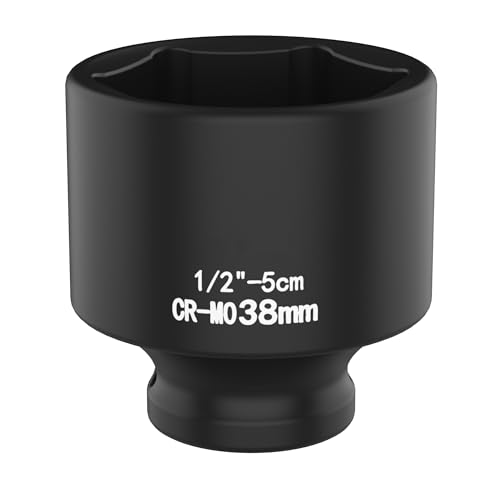
Timsec 1-1/2 in Element Socket, 1/2 in Drive
$13.99A 1-1/2 inch element socket built specifically for this fastener, avoiding the common mixup with 1-1/16 inch anode sockets.
Best for: Any residential element replacement
Check price on Amazon
Reliance 9000507 Lower Thermostat
$13.96A replacement thermostat worth pairing with a new element when the thermostat itself is original and aging alongside it.
Best for: A tank that runs out too fast
Check price on AmazonFrequently asked questions
- What size socket do I need to replace a water heater element?
- A residential heating element uses a 1-1/2 inch element socket, not the 1-1/16 inch socket commonly sold for anode rods. The two show up side by side in search results, so confirm the socket is labeled specifically as an element wrench before ordering, since a 1-1/16 inch socket simply will not fit an element.
- How do I know if my water heater element is bad?
- With power off and the wires disconnected, test the element with a multimeter set to ohms across its two terminals. A failed element reads as an open circuit, essentially infinite resistance, while a working element reads a low, specific resistance value. No hot water, or hot water that runs out unusually fast, is the typical symptom that prompts this check.
- Do I have to drain the tank to replace a water heater element?
- Yes. The tank must be drained to below the level of the element being replaced, fully for a lower element or several gallons below an upper element, before the element can be removed without water pouring out of the open port. Skipping this step means removing the element under full tank pressure.
- Why did my new water heater element fail immediately after I installed it?
- The most common cause is restoring power before the tank was completely refilled and air-free. An element energized without water fully surrounding it has nothing to carry away the heat it produces and can fail within seconds. Always confirm a steady, sputter-free stream at an open hot tap before restoring power, not just an estimate of refill time.
- Can I use a higher wattage element than the one I am replacing?
- Only if the existing breaker and wiring were sized for that higher wattage in the first place. A 4,500 watt element on a 240 volt circuit draws about 18.75 amps, while a 5,500 watt element draws about 22.9 amps, and installing the higher wattage on wiring sized for the lower one can overload the circuit. Match the replacement to the tank's nameplate rating.
- How do I check that a 240 volt circuit is actually off before working on an element?
- Switching the breaker off is the first step, not the last confirmation. Check both leads at the element's terminals directly with a multimeter set to AC voltage, since a water heater element runs on two hot legs, and testing only one leg to ground can read as safe even while the other leg is still live.
Never restore power to an element that is not confirmed fully submerged, and always verify zero voltage at both terminals before disconnecting wiring. Those two checks are what separate a routine element swap from a burned-out part or a shock hazard.