Replacing a storage tank · Intermediate
Buy Once Tank Water Heater Setup
Quick answer
The buy-once tank setup adds three things to a basic replacement: a powered anode rod so the tank does not corrode from the inside, a thermostatic mixing valve so it can store hotter and deliver safely, and a leak detector with an automatic shutoff. Those three decide whether the tank reaches year twelve.
A tank fails from the inside, and what decides when is the anode rod. Everything on this list beyond the basic replacement is aimed at either extending the tank life or getting more usable hot water out of the same gallons.
The thermostatic mixing valve is the item people skip and should not. Storing at 140 F and delivering at 120 F yields noticeably more usable hot water from the same tank, and the valve is what makes storing hotter safe rather than reckless.
The complete parts list
Every line below is a real listing with a live link. Prices come from verified catalog data and change often.
The heater
$945.99A 50 gallon professional line tank. The gallons matter less than the first hour rating, so check the label against your own peak hour before settling on a size.
-
 Rheem
RheemRheem PROE50 M2 50 Gallon
The 50 gallon professional electric, which is the single most common residential size in the country.
Required by code in most places
$105.75-
 Oatey
OateyOatey 34084 26 in Aluminum Pan
Aluminium rather than plastic. It costs a few dollars more and does not go brittle.
-

-
 Cash Acme
Cash Acme NCLX-5LX 150 psi T&P Valve
A 150 psi rated T&P valve. Match it against the working pressure stamped on your tank data plate.
-
 Eastman
Eastman Steel-Flex 18 in Water Connector x 2
Braided stainless with a swivel nut, so the tank can be set down and then connected.
-

Thermal expansion
$125.57-
 Amtrol
Amtrol ST-5 2 Gallon
The Amtrol ST series is the potable line, as distinct from the hydronic Extrol line that appears beside it in search results.
-
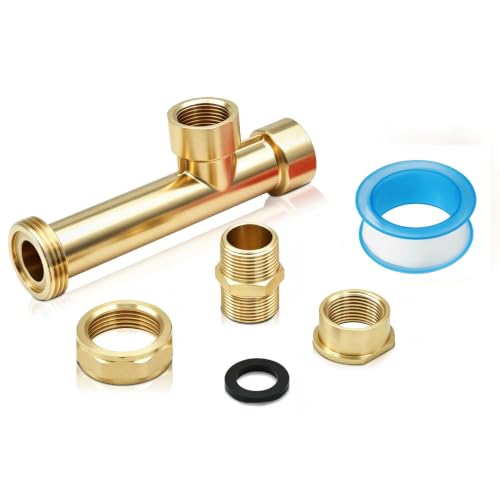 Temsteel
Brass Water Heater Expansion Tee, 3/4 in NPT
A brass tee so the tank hangs off the cold inlet without cutting the line twice.
-

The upgrades that earn their place
$345.41These three are the difference between this list and the budget one.
-
 Chromex
Chromex Powered Titanium Anode, 40 to 89 Gallon
An impressed current anode is not consumed, so it is fitted once instead of every four years, and it eliminates the sulphur smell outright.
-
 Cash Acme
Cash Acme HG110-D SharkBite Connect
A push connect thermostatic mixing valve. Store hotter, deliver at 120 F, get more usable gallons from the same tank.
-
 U.S. Solid
U.S. Solid 3/4 in Auto Shut-Off Valve
An NSF certified motorised ball valve with a sensor. It closes the cold inlet when the pan wets.
Efficiency and monitoring
$35.97-
 Dojomadf
Self-Adhesive Foil Pipe Insulation, 3/4 in
Pre-slit self-adhesive pipe insulation, which stays closed around the pipe rather than gaping along the slit.
-
 BOMATA
BOMATA Digital Water Thermometer, IPX7
Measure the delivered temperature at the tap. The dial on the heater is not a measurement.
-
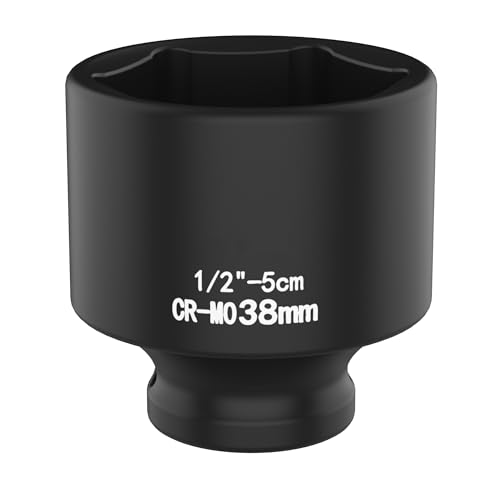 Timsec
Timsec 1-1/2 in Element Socket, 1/2 in Drive
A 1-1/2 inch element socket. The 1-1/16 inch ones flooding these search results are the RV anode size and will not fit.
Parts list total
$1558.6915 lines across 5 groups. Prices change often and are a guide only. This is the parts list, not the installation: gas, flue and electrical work belong to the licensed trade that signs the permit.
Parts list
Get this parts list as a checklist
One email with the full list, every item linked, so you can tick it off at the supplier or on your phone.
No spam. Unsubscribe whenever you like.
What you can skip
Telling you not to buy something is what makes the rest of the list credible.
- A smart controller. It is genuinely useful for measuring behaviour, but it saves nothing on its own and belongs on the expert list.
- A recirculation pump. Only if the far tap genuinely takes minutes. It costs standing heat loss every hour it runs.
What to upgrade first
- The mixing valve, if the household runs out. It is usually cheaper than a bigger tank and it solves the same complaint.
- The powered anode, in hard or softened water. Softened water can consume a magnesium rod in two years.
The other tiers in this ladder
- Budget Tank Water Heater Replacement (Beginner): The complete parts list for a straight electric tank replacement at the lowest sensible cost, with every part that is ge
- Long Life Tank Water Heater Setup (Expert): The tank setup built to outlast its warranty, with a plumbing supply grade tank, impressed current anode protection, ful
The other way to do this
A different project. The unit is the cheap part: the gas line upsizing and the vent are what decide whether it happens, and the service valves and descaling kit are part of the purchase rather than afterthoughts.
- Entry Gas Tankless Conversion (Beginner)
- Condensing Gas Tankless Conversion (Intermediate)
- Whole House Tankless Setup (Expert)
Frequently asked questions
- Who is the buy once tank setup for?
- An owner-occupier replacing a tank they expect to live with for a decade. Everything on the list is either required in most jurisdictions or is the item that prevents the next failure, and the "what to skip" section says plainly what is not needed.
- Do I need every item on this list?
- No, and the page says which ones. The required group covers what most jurisdictions ask for on any water heater installation. Everything after it is a judgment call, and the skip section explains which items genuinely do not apply to a straightforward installation on a concrete floor near a drain.
- Does this include the installation?
- No. This is the parts list. Gas line, flue and electrical work belongs to the licensed trade that signs the permit, and what that work costs is a different question that HouseProjectCalc covers. Buying the parts yourself and having them fitted is common and usually cheaper than a supplied-and-fitted quote.
- Are these prices current?
- They come from verified catalog data and they move often, especially on accessories. Treat the total as a planning figure rather than a quote, and check each listing before ordering. Availability on water heater accessories moves even faster than price does.
This is a parts list, not an installation guide. A water heater is a pressure vessel: never cap, plug or remove the temperature and pressure relief valve, and the discharge pipe runs to within six inches of the floor with no valve and no upward run. Gas line, flue and vent work belongs to a licensed plumber or gas fitter, because improper venting produces carbon monoxide. Turn the breaker off before touching an element and never energise one that is not submerged. Water at 140 F scalds a child in seconds, which is what a thermostatic mixing valve exists to prevent.