Recirculation
Grundfos Comfort System Recirculation Pump Review
Researched from the DOE test procedures, NFPA 54 and NEC code tables, and manufacturer specifications. Updated .
Quick answer
A recirculation pump solves one specific problem: the ten or twenty seconds of cold water that run down the drain before hot water reaches a distant shower or kitchen sink. It keeps the hot line full of actually-hot water, on a schedule or continuously, by pushing water in a loop back toward the tank. Start with the recirculation pump calculator if you have not yet decided whether a loop makes sense for your house.
The Grundfos Comfort System 595916 is the reference product in this category for a specific reason: it is built around a crossover valve, which lets it skip the dedicated return line a true recirculation loop is supposed to have. That is what makes it installable in a house with one existing hot line and no second pipe running back to the water heater.
Why is almost every 'Grundfos' recirculation pump listing not actually Grundfos?
Search this category and the word Grundfos appears constantly, attached to pumps that are not made by Grundfos. The pattern repeats: a listing quotes a genuine Grundfos model number, usually UP15-10SU7P or 595916, in the title or the bullet points, then sells a pump made by an unrelated manufacturer as compatible with Grundfos or built to the same specification. That phrasing is not automatically dishonest, since a genuinely compatible replacement part is a real thing. But it means the part number doing the selling in the title belongs to a different manufacturer than the one actually named on the box.
The Grundfos Comfort System 595916 reviewed here is the one pump in this category actually made and sold by Grundfos, with the Grundfos name and the Grundfos model number belonging to the same product rather than one borrowed to sell the other. If a listing headlines a Grundfos part number but the brand field says something else, that mismatch is the whole story, and it is worth reading twice before paying a premium for a name that is not actually on the part you would receive.
What the specifications actually say
Grundfos publishes a short spec sheet for this unit rather than a full engineering datasheet, and the figures that are there are the ones that actually decide whether it fits your house.
| Spec | What Grundfos publishes | Why it matters |
|---|---|---|
| Motor power | 25 watts | Low enough to run for extended periods on a standard outlet timer without needing a dedicated circuit |
| Kit contents | Pump plus crossover valve, sold as one kit | Most residential retrofits have no dedicated return pipe, so the kit has to solve that problem on its own or it does not work |
| Timer | Included with the kit | A pump with no schedule circulates around the clock, which is the single biggest driver of standby heat loss in this category |
| Return path | Crossover valve at the farthest fixture, existing cold line doubles as the return | This is what lets the kit skip the second pipe a dedicated-loop system would otherwise require |
Published standard Source: Manufacturer product listing and specifications for the Grundfos GRU-595916 Comfort System. Grundfos does not publish a flow rate in gallons per minute for this pump on its consumer listing. That gap is stated here rather than estimated; if a flow figure matters to your planning, use the recirculation pump calculator with the wattage and loop length you actually have.
What does a recirculation loop actually cost you in standby heat?
A recirculation pump does not create hot water for free. Every gallon that circulates back to the tank arrives a little cooler than it left, and the tank has to make up that difference. Run the loop continuously and a house effectively keeps the entire hot water line at temperature around the clock, which is a real, ongoing energy cost even though it is smaller than a boiler system. Run it only on a timer, matched to the hours the house is actually using hot water, and the standing loss shrinks to a fraction of that.
This is why the timer that ships in the 595916 kit is not a minor accessory. A recirculation pump with no schedule is a pump reheating a pipe at two in the morning that nobody is using. The honest tradeoff of any recirculation system is exactly this: it trades the wait at the tap for standing heat loss in the pipe, and the size of that trade is set almost entirely by how well the timer or thermostat is dialed in, not by the pump itself. Anyone weighing a recirculation pump against a point-of-use heater at the fixture should look at this tradeoff directly; see recirculation pump versus point-of-use heater for the comparison in full, and how standby loss works for the mechanism behind it.
Who does the Grundfos Comfort System suit?
This kit suits a house with one existing hot line running to the farthest fixture and no dedicated return pipe, which describes most homes that were not plumbed for recirculation from the start. It also suits anyone who wants the pump that actually carries the Grundfos name rather than one that only references it. Plumbers and remodelers who need to specify a part with confidence, without checking whether a listing brand and part number actually agree, gravitate toward this one for exactly that reason.
Who should not buy the Grundfos Comfort System?
A house that already has a dedicated return line plumbed in does not need the crossover valve this kit is built around, and a dedicated-loop pump is the more direct match for that plumbing. Anyone chasing the shortest possible wait at a single far fixture, rather than a whole-house loop, is usually better served by an under-sink point-of-use pump instead, since mounting closer to that fixture shortens the loop the pump has to drive. And anyone unwilling to set and periodically check a timer should not install any recirculation pump at all: an always-on loop with no schedule is the most common way this category disappoints buyers on their utility bill.
Credibility note: if your plumbing already has a return line, a dedicated pump without a crossover valve is the better fit, not this kit.
What does installing the Grundfos Comfort System actually involve?
The kit ties in at the water heater outlet and installs a thermally activated crossover valve under the fixture farthest from the tank, typically the sink at the far end of the house. That valve opens when the water at that fixture cools below its set point, letting the pump pull cooled water back through the existing cold line to the tank rather than out the hot tap, and it closes once the loop reaches temperature. No new pipe run is required, because the cold line does the work a dedicated return line would otherwise do. Installation is closer to adding a valve and an outlet-powered pump than to rerouting plumbing, which puts it within reach of a confident DIYer. Anyone unsure about sweating a fitting or working near an electrical outlet close to plumbing should treat this as a licensed plumber job rather than a weekend project.
How we researched this review
This review is compiled from the manufacturer published product listing and specifications, the stated contents of the retrofit kit, and the consensus of verified owner reviews on how the crossover valve behaves in an actual home. We did not install this pump and did not test its flow rate, energy draw or performance in a live plumbing system. Where Grundfos has not published a figure, that gap is stated directly rather than estimated.
If the Grundfos kit is not the right fit
The 595916 is the reference pump for a crossover-valve retrofit with no dedicated return line. These are the ones worth comparing it against when that specific setup is not your situation.

PROZRTED Smart Recirculating Pump Kit
$129.99A built-in thermostat and timer in one body at the budget end, the combination that keeps a loop from reheating the pipe all day on a tighter price than the Grundfos kit.
Best for: A budget retrofit with a thermostat
Check price on Amazon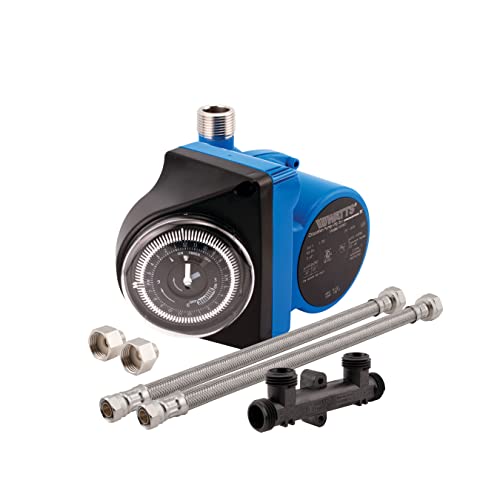
Watts Premier Recirculation System
$299.00A complete system with its own programmable timer for a tank heater, a straightforward alternative kit when the Grundfos crossover valve design is not the one you want.
Best for: A tank heater with a predictable schedule
Check price on Amazon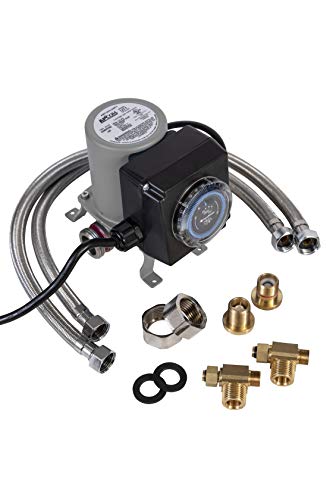
APCOM UT1 Under Sink Recirculation Pump
$374.99Mounts at the far fixture rather than at the tank, which shortens the loop the pump actually has to drive when the wait is concentrated at one distant sink.
Best for: One fixture at the end of a long run
Check price on Amazon
Laing AutoCirc with Timer
$360.00The bare pump with its own timer, for a house that already has a dedicated return line and does not need a crossover valve at all.
Best for: Anyone who wants the pump rather than a kit
Check price on AmazonFrequently asked questions
- Does the Grundfos Comfort System 595916 need a dedicated return line?
- No. The kit uses a crossover valve installed under the farthest fixture, which lets the existing cold water line act as the return path back to the tank. That is the entire reason this kit is described as a complete retrofit: it is built specifically for a house with no second pipe already running back to the water heater.
- How many watts does the Grundfos Comfort System pump draw?
- Grundfos publishes 25 watts for the pump in this kit. That is low enough to run for extended periods on a standard household outlet through a plug-in timer without needing a dedicated circuit, though the timer schedule, not the wattage, is what actually controls how much standing heat loss the loop produces.
- Is every water heater accessory that lists a Grundfos part number actually made by Grundfos?
- No. This category is full of listings that quote a genuine Grundfos model number, commonly UP15-10SU7P or 595916, in the title while selling a pump made by a different manufacturer as compatible with Grundfos. Check the actual brand field on the listing, not just the model number quoted in the title, before assuming a listing is the genuine product.
- Does a recirculation pump increase my water heater's energy use?
- Yes, because circulating water back to the tank loses some heat along the way, and the tank has to reheat that water to hold its setpoint. Running the pump continuously produces the most standby loss; running it on the timer included with the Grundfos kit, matched to actual usage hours, keeps that extra energy use to a fraction of the continuous figure.
- Can I run the Grundfos pump continuously instead of on a timer?
- You can, but it defeats the point of the timer that ships with the kit. Continuous operation keeps the entire hot line at temperature around the clock, which is the single biggest driver of standby heat loss in this category. Setting the schedule to match when the house actually uses hot water is what keeps the tradeoff reasonable.
- Will a recirculation loop affect my expansion tank sizing?
- It can make an undersized or aging expansion tank more noticeable, because keeping the line warm around the clock adds thermal cycling on a closed system. If the T&P valve starts to weep after adding a recirculation pump, the fix is a new expansion tank or a new valve, never capping or removing the valve that is there.
A recirculation loop adds thermal cycling to the plumbing system, which is a reason to check on thermal expansion, never a reason to touch the T&P valve. If the water heater sits on a closed system, a loop that keeps the line warm around the clock can make an undersized or failing expansion tank more noticeable. If the T&P valve starts to weep after a recirculation pump goes in, the answer is a new expansion tank or a new valve, never capping, plugging or removing the one that is already there. Turn the pump off at the outlet, not just the timer, before doing any work on the crossover valve or connections.