Tankless
Best Propane Tankless Water Heaters
Researched from the DOE test procedures, NFPA 54 and NEC code tables, and manufacturer specifications. Updated .
Quick answer
Propane tankless units exist for one reason: no natural gas main reaches the property. That covers a lot of rural homes, cabins, and off-grid builds, and propane tankless is a mature, well-supported category for exactly that situation.
The single most important thing to get right when buying propane is also the easiest thing to get wrong: propane and natural gas versions of the same heater family are different products with different internal components (orifices, gas valve calibration) tuned for each fuel's different combustion characteristics. Manufacturers almost always distinguish them with a single letter in the model number, commonly an "N" for natural gas and a "P" for propane (liquid petroleum). Ordering the wrong letter gets you a unit that will not run safely on the gas you have.
Why can't I use a natural gas tankless unit on propane?
Natural gas and propane burn differently: propane carries roughly twice the energy per cubic foot and requires a different air-to-fuel mixture to combust cleanly. Manufacturers build fuel-specific orifices and calibrate the gas valve differently for each fuel inside otherwise near-identical unit bodies. Running a natural gas model on propane, or the reverse, produces incomplete combustion, soot, and a carbon monoxide hazard, not just reduced performance. This is why the model number distinction matters more on a tankless propane purchase than almost anything else on the page.
How do I tell the propane and natural gas versions apart?
Look for a single distinguishing letter in the model number, most commonly "N" for natural gas and "P" (or "LP") for propane, appearing at the same position across an otherwise identical model family. The packaging and spec sheet also state the fuel type explicitly. Because the letter is easy to miss when scanning a listing quickly, always confirm the fuel type in the product title and specifications before completing an order, not just the model family name.
| Fuel | Common letter | What to check before ordering |
|---|---|---|
| Natural gas | "N" (e.g. ...-N) | Confirm your home is on a natural gas main |
| Propane / liquid petroleum | "P" or "LP" (e.g. ...-P) | Confirm you have a propane tank and regulator sized for the unit's input |
Convention Source: Common manufacturer model-numbering convention across Rheem and Rinnai tankless lineups; always verify against the specific listing and spec sheet.. This convention is common but not universal. Always confirm fuel type in the product title, spec sheet and packaging rather than relying on the letter alone.
How we chose these picks
These picks were compiled from manufacturer published specifications, installation manuals and the consensus of verified owner reviews. We did not install, test or run any of these units ourselves. Where a listing's propane-specific model number was not independently confirmable at the time of writing, this page says so rather than assuming a match.
Buying tips for a propane tankless install
- Confirm your propane tank and regulator are sized for the unit's maximum BTU/h input; an undersized regulator causes pressure drop under load.
- Outdoor propane units skip interior venting, which is often the simplest retrofit for a cabin or rural property; see outdoor tankless picks.
- Double-check the model number's fuel letter against the spec sheet before ordering, every time, even on a reorder or a replacement of the same family.
- Propane delivery and tank sizing logistics are a propane supplier's domain, not something covered on this page.
Never attempt to convert a natural gas tankless unit to propane, or the reverse, without a manufacturer-approved conversion kit installed by a licensed gas fitter. Mismatched orifices and valve calibration cause incomplete combustion and carbon monoxide risk.
The picks, by tier
Every pick below is the propane-specific version of its model family. If you see a nearly identical model number without the "P" designation elsewhere, that is the natural gas version and is not a substitute.

Rheem RTG 7.0 GPM Propane Outdoor
$770.17An outdoor propane unit sized for a small house or cabin, skipping interior venting entirely for a simpler off-grid install.
Best for: Propane properties with no natural gas service
Check price on Amazon
Rinnai RE140iP Propane
$795.69A propane-specific indoor unit at an approachable size for a first whole-house propane replacement.
Best for: Propane properties replacing a non-condensing unit
Check price on Amazon
Rinnai RE140iN Natural Gas
$795.69Listed here for direct comparison: this is the natural gas twin of the RE140iP, included only to make the letter difference concrete. Order the P version for propane service.
Best for: Replacing an existing non-condensing tankless
Check price on Amazon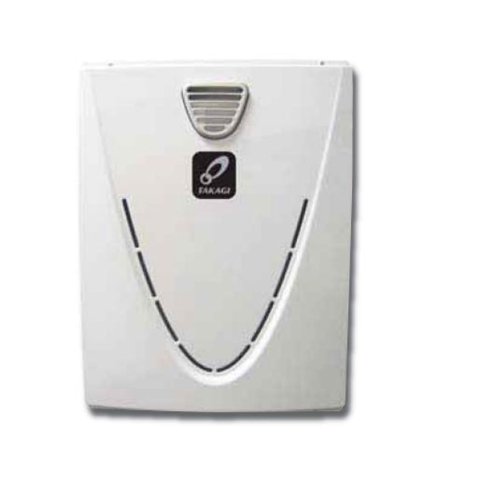
Takagi T-H3S-OS-N Condensing Outdoor
$1,355.95A high-capacity outdoor condensing option; confirm the propane-specific model number with the retailer before ordering, since it is listed here as the natural gas version.
Best for: Warm climates that still want a high efficiency unit
Check price on AmazonFrequently asked questions
- Can I use a natural gas tankless water heater on propane?
- No, not without a manufacturer-approved conversion kit professionally installed. Natural gas and propane burn at different energy densities and require different orifices and gas valve calibration. Running the wrong fuel through an uncoverted unit causes incomplete combustion and a carbon monoxide hazard, which is why manufacturers sell these as distinct model numbers rather than one universal unit.
- How do I know if a tankless water heater is the propane version?
- Check the model number for a distinguishing letter, commonly "N" for natural gas or "P" (or "LP") for propane, in an otherwise identical model family, and confirm fuel type explicitly stated in the listing title and spec sheet. For example, the Rinnai RE140iN is natural gas and the RE140iP is propane; the letter is the only visible difference, but the internal components are not interchangeable.
- Do propane tankless water heaters cost more to run than natural gas?
- Propane typically costs more per unit of delivered energy than natural gas in most markets, though local pricing varies significantly and this page does not track live fuel prices. The <a href="/calculators/water-heater-operating-cost-calculator">operating cost calculator</a> lets you compare using your own local propane and natural gas rates.
- What size propane tank do I need for a tankless water heater?
- Tank sizing depends on the unit's maximum BTU/h input and your household's propane usage across other appliances like a furnace or range, which is a propane supplier's sizing calculation rather than something this page covers. Confirm with your propane provider that the regulator and tank can support the water heater's full rated input alongside your other propane loads.
- Are outdoor propane tankless water heaters better for cabins?
- Often yes, because an outdoor-rated propane unit skips interior venting entirely, which is a meaningful simplification for a cabin or off-grid build with no existing flue chase. The tradeoff is freeze risk in cold climates, since the unit and its water lines are exposed to outdoor temperatures rather than protected indoors.
- Why do propane and natural gas tankless units look almost identical but cost different amounts?
- The unit bodies and features are often nearly identical across the fuel-specific versions in a model family, but internal components like orifices and gas valve calibration differ to match each fuel's combustion characteristics. Pricing differences between the two versions in the same family are typically minor and reflect manufacturing cost, not a difference in capability.
Read the fuel letter on the model number every single time, even on a reorder. A propane unit run on natural gas, or the reverse, is a combustion safety hazard, not a warranty inconvenience.