Electric Tankless
Best Electric Tankless Water Heaters
Researched from the DOE test procedures, NFPA 54 and NEC code tables, and manufacturer specifications. Updated .
Quick answer
An electric tankless water heater is sold as a water heater, but the purchase that actually decides whether it works is an electrical one. Every model in this category is rated in kilowatts at 240 volts, and that rating converts directly into an amp draw through the same relation an electrician uses to size any circuit: amps equal watts divided by volts. An 8 kW single-fixture unit draws a modest 33 amps. A 27 kW whole house unit draws about 112.5 amps, which is more than half of a typical 200 amp service before anything else in the house is counted.
This page ranks the picks by what that draw means for a real installation rather than by price, because the price difference between an 8 kW and a 27 kW unit is small next to the cost of a panel or service upgrade that a 27 kW unit can force. Check the breaker size calculator against the household's actual panel before choosing a size from this list.
Is an electric tankless water heater actually an electrical panel purchase?
Yes, more than it is a plumbing purchase. Every electric tankless unit runs on 240 volts, and its rated kilowatts convert to amps through the same relation used to size any electrical circuit: amps equal watts divided by volts. An 18 kW unit is 18,000 watts divided by 240 volts, which comes out to 75 amps. That figure has to fit inside whatever headroom the panel actually has, alongside the range, the dryer, the air conditioning compressor and everything else already drawing from it, before a single gallon of water gets warmer.
| Model | Rated kW | Calculated amps at 240V | Tier |
|---|---|---|---|
| Rheem 8kW Multi Fixture | 8 | 33.3 | Beginner |
| Bosch Tronic 4000 | 8.5 | 35.4 | Beginner |
| Rheem RTEX-13 | 13 | 54.2 | Beginner |
| Rheem RTEX-18 / EcoSmart ECOS 18 | 18 | 75 | Intermediate |
| Stiebel Eltron Tempra 20 | 19.2 | 80 | Intermediate |
| Rheem RTEX-24 | 24 | 100 | Expert |
| Stiebel Eltron Tempra 29 Plus | 28.8 | 120 | Expert |
| Rheem RTEX-27 | 27 | 112.5 | Expert |
| Stiebel Eltron Tempra 36 | 36 | 150 | Expert |
Published standard Source: Manufacturer published kW and voltage ratings; amps calculated from the standard relation amps = watts ÷ volts (P = I × V).. Every unit above runs at 240 volts. A licensed electrician still sizes the actual breaker and wire gauge, and typically applies additional margin above this raw calculated draw.
How much hot water will an 18 kW or 27 kW unit actually deliver?
Capacity in kilowatts converts to flow rate through the same heat transfer relation used for any water heater: one kilowatt equals about 3,412 BTU per hour, and gallons per minute equals BTU per hour divided by 500 times the temperature rise in degrees Fahrenheit. That 500 comes from the weight and specific heat of water, not from any single manufacturer, so the numbers below apply to any electric tankless unit at the stated kilowatts, not only the models pictured.
| Rated kW | GPM at 35°F rise | GPM at 70°F rise |
|---|---|---|
| 8 | 1.6 | 0.8 |
| 13 | 2.5 | 1.3 |
| 18 | 3.5 | 1.8 |
| 24 | 4.7 | 2.3 |
| 27 | 5.3 | 2.6 |
| 36 | 7.0 | 3.5 |
Published standard Source: Calculated from rated kW using 1 kW = 3,412 BTU per hour and GPM = BTU per hour ÷ (500 × °F temperature rise), the standard water heat transfer relation (Q = m × c × ΔT). This is a physics calculation, not a manufacturer flow curve.. A 35°F rise is typical of a warm climate incoming temperature reaching a 105°F setpoint. A 70°F rise is closer to a cold climate winter supply reaching the same setpoint, and it roughly halves the usable flow of every unit on this page.
How we chose these electric tankless water heaters
We did not install or run any of these units ourselves. The picks above are compiled from manufacturer published kilowatt and voltage ratings, the amperage those ratings imply, and the pattern of verified owner reviews for fit, reliability and service support. Where a listing stated its own amp draw outright, as the EcoSmart ECOS models do, we treated that as more reliable than a figure we calculated, and noted the calculation is a physics relation rather than a manufacturer test in every table above.
Tier placement follows the amp draw and the installation it implies, not the price. A unit above 24 kW is placed in Expert regardless of cost, because the panel and service work it usually requires is the harder purchase to talk yourself into honestly.
Buying tips for an electric tankless water heater
Read the amp draw off the nameplate or the listing before reading anything else about a unit. Compare that figure against the panel's labeled amperage and against what the breaker size calculator and a load calculation from an electrician say is actually available, not just the panel's total rating. Confirm the flow rate at the household's real winter inlet temperature using the temperature rise calculator, since a unit that performs well at a 35°F rise can disappoint at 70°F. See how electric tankless compares against a gas tankless unit of similar output at electric tankless vs gas tankless.
Any panel or breaker work belongs to a licensed electrician. Never energize or service a tankless unit's heating elements without shutting off the breaker first, and never assume a panel has spare capacity without a proper load calculation.
The picks, by tier
Beginner picks here are single-fixture or warm-climate units that ask little of the panel. Intermediate picks are the realistic whole house sizes for a service that has already been checked. Expert picks are the largest units in the catalog, which most houses should not buy without a load calculation first.

Rheem RTEX-13 13kW
$278.00Thirteen kilowatts draws about 54 amps, a load most existing panels with any spare capacity can take, and it supports roughly one shower at a time in a warm inlet climate.
Best for: A single bathroom in a warm inlet climate
Check price on Amazon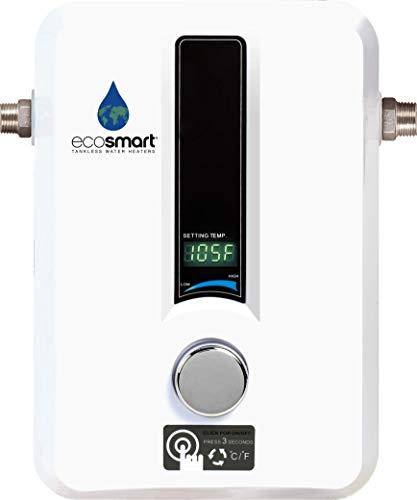
EcoSmart ECO 8 8kW
$218.85An 8 kW self-modulating unit at the low end of the draw range in this category, best understood as a single fixture or shop sink heater rather than a whole house one.
Best for: A single fixture or a shop sink
Check price on Amazon
Bosch Tronic 4000 8.5kW
$229.00A compact 8.5 kW unit from a manufacturer with an established service network, which matters on electric tankless units more than on almost anything else in a house.
Best for: One fixture, or a point of use upgrade
Check price on Amazon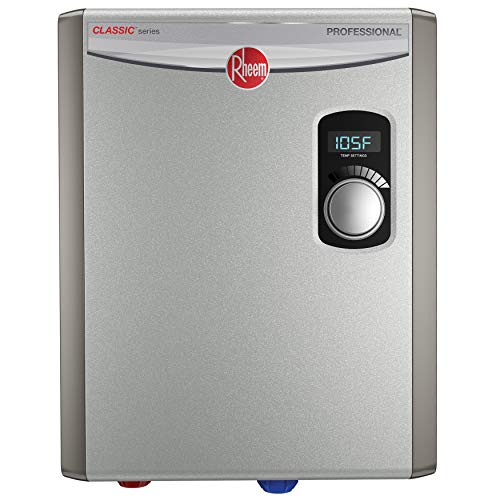
Rheem RTEX-18 18kW
$438.00The realistic ceiling on a 200 amp service. Above this size, checking the panel stops being optional.
Best for: The realistic ceiling on a 200 amp service
Check price on Amazon
Stiebel Eltron Tempra 20 Trend 19.2kW
$544.43At 19.2 kW, this modulates its output against the flow it senses rather than switching elements in blocks, which holds the outlet temperature steadier through a shower.
Best for: A one to two bathroom whole house electric install
Check price on Amazon
EcoSmart ECOS 18 18kW
$411.73The listing states its draw outright, 75 amps at 240 volts, which is more candor about the electrical load than most listings in this category offer.
Best for: A whole house electric install on a proven service
Check price on Amazon
Stiebel Eltron Tempra 29 Plus 28.8kW
$795.00The Plus models hold a set outlet temperature and throttle flow rather than letting the temperature sag under heavy demand, at a draw of 120 amps.
Best for: Cold inlet regions that will not accept a temperature drop
Check price on Amazon
Rheem RTEX-27 27kW
$689.99Three heating chambers and about 112.5 amps of continuous draw. This is a service upgrade with a water heater attached to it, and the reason to list it is mainly to say so plainly.
Best for: Cold inlet regions with a 400 amp service
Check price on AmazonFrequently asked questions
- How many amps does an 18 kW electric tankless water heater draw?
- An 18 kW electric tankless water heater draws about 75 amps at 240 volts, calculated directly from watts divided by volts. That figure is the single largest factor in whether a 200 amp electrical service can accept the unit, and it matters before any consideration of price or brand. A licensed electrician still confirms the actual breaker and wire size with additional margin above this raw draw.
- Can a 27 kW electric tankless water heater run on a 100 amp panel?
- No. A 27 kW unit like the Rheem RTEX-27 draws about 112.5 amps by itself, which is more than an entire 100 amp panel's capacity before any other circuit in the house is counted. A unit at this size assumes a service closer to 400 amps or a dedicated subpanel, and skipping that check is the most common mistake buyers make in this category.
- Does an electric tankless water heater deliver less hot water than a gas one?
- Often, yes, because flow rate follows directly from rated kilowatts through a fixed heat transfer relation. An 18 kW electric unit supports roughly 3.5 gallons per minute at a 35°F rise, well under what a comparable gas tankless unit can deliver, which is why electric tankless models tend to suit one fixture group rather than an entire cold climate house.
- Why do the Rheem RTEX-18 and the EcoSmart ECOS 18 draw the same amps?
- Both are rated 18 kW at 240 volts, and amp draw follows directly from watts divided by volts regardless of brand, so any 18 kW unit at 240 volts draws about 75 amps. The differences between the two come down to modulation behavior, warranty terms and service network, not the electrical load either one puts on the panel.
- What does a Stiebel Eltron Tempra unit do differently from a fixed-output unit like the RTEX series?
- The Tempra line modulates its output against the flow it senses, which holds the outlet temperature steadier through a shower as demand shifts. A fixed-output unit like the Rheem RTEX series switches heating elements on in blocks, which can produce a small temperature swing. Both still draw amps according to their rated kilowatts regardless of this control difference.
- Should an 8 kW unit like the Rheem 8kW or EcoSmart ECO 8 be sized for a whole house?
- No. An 8 kW unit is built and marketed as a single fixture or supplemental heater rather than a whole house replacement, and treating it as one produces a lukewarm shower at best. The kilowatt-to-amps table above shows how far below the 18 to 27 kW whole house range these entry-level units sit.
Treat the electrical panel as the first spec, not the last one. Confirm available amperage before ordering any unit above 18 kW, and leave any breaker or panel work to a licensed electrician. A T&P valve is not part of this category, but the same rule about never doing your own service panel work applies with the same seriousness.